
A broad catalogue does not tell you which products will move, comply with sale requirements, or protect your working capital. By the end, you will have a practical method for testing local demand, building a focused range, checking supplier documents, and calculating the real return before placing an opening order.
Key takeaways
- Map 12 months of local orders before choosing products.
- Balance repeat-demand medicines with seasonal and specialist products.
- Ask for licence copies, product documents, and batch traceability records.
- Calculate profit after freight, expiry, discounts, and credit costs.
Start with local demand, legal channels, and your service territory
Profit starts with a territory-sized demand map, not a large catalogue. Review the last 12 months of pharmacy orders, prescriber patterns, patient volume, disease seasonality, animal population and competing brands across your delivery area. Then match each opportunity to customers you can reach repeatedly.
Check these channels before selecting pharma franchise products for stockists:
- Retail pharmacies: recurring prescription and over-the-counter demand, with faster payment and frequent replenishment.
- Clinics and hospitals: larger prescription volumes, but stricter tender, documentation and credit expectations.
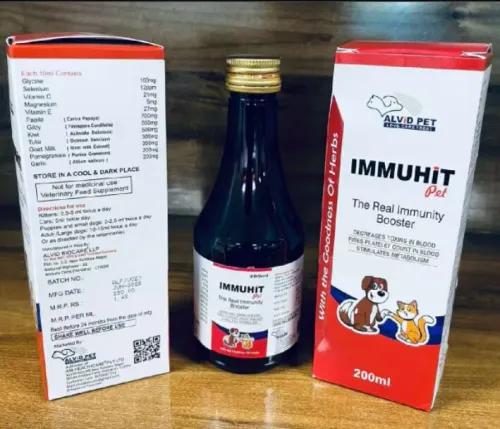
- Veterinary clinics and pet retailers: separate sales calls, species-specific knowledge and different storage or labelling checks.
- Distributors outside your territory: useful only when the agreement permits sub-distribution and the margin survives extra freight.
| Channel | Best fit | Main constraint |
|---|---|---|
| Retail pharmacy | Fast-moving and chronic products | Competition and short replenishment cycles |
| Clinic or hospital | Prescription-led ranges | Credit, tenders and purchase documentation |
| Veterinary clinic | Animal-health products | Species, dosage and seasonal demand |
| Pet retailer | Companion-animal supplements and care items | Consumer education and slower rotation |
Your wholesale drug licence, approved premises, storage capacity and designated competent person must cover the channel; a franchise appointment does not replace them. Confirm GST, PAN, delivery territory and billing controls before discussing minimum orders.
For pharma franchise products for healthcare entrepreneurs, put territory, channel rights, credit period, freight, minimum order, expiry replacement and damaged-goods terms in writing. Request generic name, strength, dosage form, pack size, MRP, trade price, shelf life, storage temperature and batch-release documents before listing. Ensure your records can trace every dispatch by batch, customer and invoice.
Build a balanced range around repeat movement, not SKU count
A manageable pharma franchise product range starts with repeat prescriptions and pharmacy reorder data, not a large catalogue. Build around therapeutic clusters that serve the same prescribers, then add complementary strengths, dosage forms and pack sizes instead of isolated products with no shared customer.
| Category | Role in the range | Control |
|---|---|---|
| Fast-moving | Drives regular pharmacy replenishment | Confirm local invoice and patient-volume data |
| Chronic-care | Creates predictable repeat demand | Match strengths, dosage forms and refill patterns |
| Prescription | Extends prescriber coverage | Check Schedule H, H1 or X sale, records and storage duties |
| Over-the-counter | Supports walk-in demand | Compare seasonality, competition and expiry risk |
| Seasonal | Captures short demand peaks | Buy narrowly and set an exit plan before expiry |
| Veterinary | Serves livestock or animal-health prescribers | Separate species, pack sizes and withdrawal restrictions |
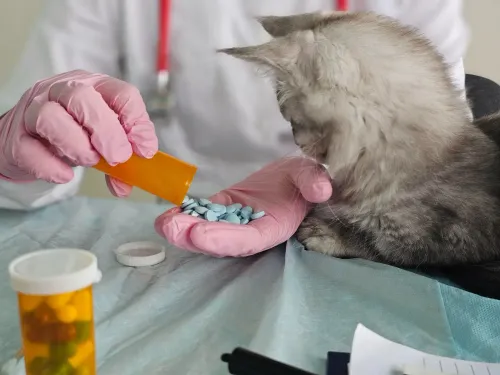
| Pet | Serves clinics and pet retailers | Track companion-animal channels and administration needs |
Keep human, livestock and pet lines in separate demand sheets. Combining them hides slow stock: a livestock product may need species-specific labelling, while a pet product follows clinic or retail movement rather than human-pharmacy prescriptions.
Before adding any item to your pharma franchise products for stockists, request the generic name, strength, dosage form, pack size, MRP, trade price, minimum order quantity, remaining shelf life, batch-release documents, storage temperature and expiry-return policy. Use those fields to reject products that duplicate existing stock or require a channel you cannot serve.
Review the range monthly by batch movement, prescriber coverage, expiry exposure and reorder frequency. A smaller pharma franchise product range with complementary demand is easier to sell, store, audit and recall than a catalogue full of one-off SKUs.
Verify licences, product documents, and supplier traceability
Before accepting a pharma franchise product range, verify the legal sale channel and the supplier’s ability to prove where every batch came from. A franchise appointment does not replace your wholesale drug licence, approved premises, storage arrangements, or designated competent person.
1. Confirm your wholesale drug licence, GST registration, PAN, premises address, storage capacity, delivery territory, and bank or credit details before negotiating minimum order quantities. Check the state licensing portal because document lists differ by state.
2. Request each product’s generic name, strength, dosage form, pack size, MRP, trade price, minimum order quantity, shelf life, storage temperature, expiry-return policy, and batch-release documents. Verify product-specific authorisation separately for human, veterinary, and pet lines; a manufacturer’s general licence does not authorise every strength, species claim, or dosage form.
3. Check prescription controls before listing human medicines. Schedule H, H1, and X products have different prescription, labelling, sale-record, and storage duties. Confirm your billing system can record the buyer, prescriber, product, and batch for H1 sales.
4. Treat refrigerated products as a cold-chain gate. Require documented 2–8 °C receipt and dispatch temperatures, calibrated monitoring, and a written excursion procedure; ordinary warehouse space is not an acceptable substitute.
5. Test traceability with a sample batch. The pharma franchise wholesale supplier must locate its dispatch, batch, expiry, customer, and invoice quickly enough to support a targeted recall. If it cannot, catalogue breadth is a liability, not an advantage.
Calculate contribution after freight, expiry, discounts, and credit
A 25% printed trade margin does not equal a 25% stockist return. Calculate contribution per sellable unit after every leakage, then compare that figure with expected monthly movement and working capital tied up.
Use this formula: net selling revenue minus purchase cost, schemes, freight, expiry provision, credit cost, and returns. Record the result per ₹100 invoice value so competing pharma franchise products for stockists share one basis.
| Measure per ₹100 invoice | Product A | Product B |
|---|---|---|
| Printed trade margin | ₹25.00 | ₹20.00 |
| Scheme or discount | ₹3.00 | ₹1.00 |
| Freight | ₹2.00 | ₹0.50 |
| Expiry provision | ₹1.50 | ₹0.50 |
| Credit cost | ₹1.00 | ₹0.50 |
| Damaged or returned stock | ₹1.00 | ₹0.20 |
| Contribution after leakage | ₹16.50 | ₹17.30 |
Product B wins despite the lower printed margin. Test the result against actual movement: ₹17.30 on ten monthly cases is weaker than ₹16.50 on 100 cases, provided the extra volume does not create overdue receivables or storage pressure.
Before appointing pharma franchise products for healthcare entrepreneurs, put freight responsibility, credit days, scheme settlement, batch-expiry replacement, damaged-goods treatment, and returns in writing. Check the current MRP, NPPA ceiling price where applicable, and each batch’s remaining shelf life; a price revision or short-dated delivery can erase the forecast contribution.
Use a documented application and trial order before scaling
Do not negotiate territory or minimum orders until your documents, trial terms, and exit conditions are written down.
The pharma franchise application process starts with verifying your wholesale drug licence, GST registration, PAN, premises address, storage capacity, delivery territory, and bank or credit details; portal requirements differ by state, so an online form alone is not a checklist.
1. Request a product file from the pharma franchise wholesale supplier. Record the generic name, strength, dosage form, pack size, MRP, trade price, MOQ, remaining shelf life, storage temperature, batch-release documents, and expiry-return policy.
2. Separate human and animal-health approvals. For Schedule H, H1, or X medicines, confirm prescription, labelling, sale-record, and storage controls; H1 billing must identify the required product and buyer records. Verify each veterinary species claim, dosage form, and label separately.
3. Put the commercial terms in the agreement: territory, channel rights, MOQ, credit period, freight, damaged-goods treatment, batch and expiry replacement, promotional-material compliance, termination, and post-termination stock handling. “Franchise” creates none of these rights automatically.
4. Define a trial order by therapeutic cluster, not catalogue size. Choose products serving the same prescribers and pharmacies, then set a 60- to 90-day review using units sold, repeat orders, expiry exposure, complaints, collection time, and recall response.
Ask the supplier to trace one dispatch from product and batch to invoice and customer. Alvid Groups, for example, can be assessed through this same evidence-based process across its human and veterinary lines, rather than by catalogue breadth. Scale only after the trial proves movement and traceability.
Related products
 | Veterinary Division LEEPHOS-XP is a high-potency veterinary feed supplement designed to manage metabolic disorders and enhance productivity in livestock like cattle,... View product → |
 | Pharma Division Hy Fresh is a Chlorhexidine Mouthwash IP 0.2%, formulated to provide effective protection against oral infections, plaque, and gum problems. View product → |
Frequently asked questions
How should stockists assess local demand before choosing pharma franchise products?
Review 12 months of pharmacy orders, prescriber patterns, patient volume, disease seasonality, animal population, and competing brands across your delivery area.
How many products should a pharma franchise product range include?
Choose a balanced range built around repeat movement, then add seasonal or specialist products instead of maximising SKU count.
What documents should stockists verify from a pharma franchise wholesale supplier?
Request licence copies, product documents, batch traceability records, and evidence showing the supplier can identify each product’s manufacturing and distribution history.
What costs belong in a pharma franchise product profitability calculation?
Subtract freight, expiry losses, discounts, and the cost of extending credit from the product’s contribution before scaling orders.
Related products
 | Pharma Division by Alvid Biocare is a high-quality antibiotic formulation designed to combat a wide range of bacterial infections. View product → |
 | Veterinary Division Butaphosphan and Methylcobalamin Injection (Vet.) The image shows LEEPHOS, a veterinary injection containing Butaphosphan and Methylcobalamin. View product → |
 | Veterinary Division PROBIBEST VET is a veterinary nutritional supplement for livestock, including horses, buffaloes, and cattle. View product → |
 | Veterinary Division EXFLUK Based on the image provided, EXFLUK is a broad-spectrum veterinary anthelmintic (deworming) suspension produced by ANI Healthcare. |
Keywords