Milk output falls for different reasons: low dry-matter intake, poor forage, heat stress, metabolic disease, rumen disruption, or an unbalanced ration. By the end, you will be able to identify the likely bottleneck, match a supplement format to the job, use it safely, and judge results by profitable milk and animal health rather than a short-lived change in volume.
Key takeaways
- Test forage and ration dry matter before adding a supplement.
- Match supplementation to the cow’s lactation stage and production target.
- Choose protein, energy, mineral, or yeast support for the actual bottleneck.
- Track intake, milk yield, milk components, and cost per litre.
Find the bottleneck before choosing a supplement
Start with the ration and the cow, not the supplement tub. A cattle supplement for milk production cannot repair low dry-matter intake, poor forage quality, too little physically effective NDF, inadequate drinking water, or an imbalanced base ration. Measure feed dry matter, test forage, and check the total mixed ration before adding anything.
Use the herd’s signals to identify the bottleneck:
- Low milk yield with loose manure, poor cud-chewing, or falling milk fat points toward rumen disruption or insufficient effective fibre.
- A sharp post-calving drop, rapid body-condition loss, or elevated ketosis risk points toward inadequate energy intake and transition problems.
- Low milk protein with low intake suggests insufficient usable energy or protein, not automatically a mineral deficiency.
- Heat stress, mastitis, lameness, parasites, milk fever, and subclinical hypocalcaemia require management or veterinary action rather than a general supplement.
| Finding | Check before supplementing | What a response must prove |
|---|---|---|
| Low milk volume | Intake, water, ration energy, disease records | Higher milk yield without excessive body-condition loss |
| Low milk fat | Forage fibre, sorting, rumen signs, total dietary fat | Improved fat percentage without reduced intake |
| Weak components or fertility | Protein supply, minerals, health status | Better components or health, not merely more bulk milk |
Compare fat- and protein-corrected milk, feed cost per kilogram of milk, body condition, health events, and an untreated or historical control. Keep total dietary fat near 6–7% of ration dry matter; excess unsaturated fat can reduce fibre digestion, intake, and milk-fat synthesis.
Match supplementation to the cow’s production stage
The final three weeks before calving are a different feeding job from the rest of the dry period. A cow must enter lactation with stable intake, adequate mineral status, and calcium-mobilisation capacity—not excessive body condition.
- Dry period: Maintain forage quality, physically effective fibre, and a dry-cow mineral programme while avoiding excess energy. Trace minerals belong in the ration only after checking forage, soil history, antagonists, and herd diagnostics; more copper, selenium, or zinc is not automatically better.
- Close-up dry cow: An anionic diet can lower hypocalcaemia risk by creating mild metabolic acidosis. Formulate adequate chloride and sulfur, then monitor urine pH; a practical Holstein target is about 6.0–6.5, with lower targets generally used for Jerseys.
- Calving: Oral calcium boluses suit elevated milk-fever risk, including older cows, previous milk-fever cases, and twin-bearing cows. Use them with the dry-cow mineral strategy, not as a universal milk-production booster.
- Early lactation: Support dry-matter intake, energy, protein, rumen function, and recovery after calving. Niacin has a stronger rationale during heat stress or negative energy balance, but variable results make it no substitute for feed intake and transition management.
- Peak lactation: Increase energy density only without damaging fibre digestion. Keep total dietary fat near or below 6–7% of ration dry matter; excess unsaturated fat can lower intake and milk-fat synthesis.
- Late lactation: Protect body condition and feed conversion while avoiding unnecessary supplementation as yield declines. A forage analysis and ration review should guide the step-down.
Choose the mechanism that matches the production goal
Choose the mechanism by the result you need: more milk volume, higher milk-fat percentage, higher milk-protein percentage, better body condition, or more milk from each kilogram of feed.
| Option | Primary mechanism | Production effect and limitation |
|---|---|---|
| Energy | Supplies usable calories | Can increase milk volume and protect body condition, but only when dry-matter intake and forage quality support the response. |
| Calcium | Supports calcium balance around calving | Helps prevent milk fever and protects feed intake after calving; an oral calcium bolus suits high-risk cows, not every lactating cow. |
| Rumen function | Improves fermentation and fibre use | Better cud chewing, manure consistency, milk-fat percentage, and feed conversion can follow; acidosis or low physically effective NDF will blunt the result. |
| Protein | Delivers absorbable amino acids | Supports milk volume and milk-protein percentage when dietary protein limits production; excess protein raises feed cost without guaranteeing more milk. |
| Minerals | Supports enzymes, immunity, reproduction, and metabolism | Correcting a deficiency can restore intake and yield, but a mineral mix does not replace energy or protein. |
| Transition support | Reduces metabolic strain after calving | Rumen-protected choline supports hepatic fat export, while niacin fits heat stress or negative energy balance; any milk gain is secondary to better recovery. |
A short-term rise in the bulk tank proves little. Compare milk yield, fat- and protein-corrected milk, feed cost per kilogram of milk, body-condition change, health events, and results against untreated or historical cows. A binder cannot fix moldy feed, and no supplement repairs inadequate intake or a poorly balanced ration.
Compare supplement formats and follow the label precisely
Compare the supplement dosage per animal, delivered nutrients, and handling time—not the pack price alone. A cheaper product that is refused, mis-mixed, or underdosed is not economical.
| Format | Dosing accuracy and absorption | Labour, palatability, cost, and oversight |
|---|---|---|
| Gel | Measured bolus gives a defined dose; absorption depends on the ingredient and gut function. | Fast for individual cows but labour-intensive; palatability is less relevant. Use veterinary direction for high-risk animals. |
| Liquid | A liquid mineral supplement doses evenly only when the pump is calibrated and the mixture stays uniform. | Easy through water or feed, but leaks, settling, and poor taste cause uneven intake; compare equipment and wastage costs. |
| Powder | Weighing gives accuracy; absorption depends on formulation and ration interactions. | Flexible but dusty and easy to refuse; requires careful mixing and usually costs less per dose than a bolus. |
| Feed premix | A feed premix delivers reliably only when mixed into the stated feed quantity and every cow consumes it. | Lowest individual-cow control; efficient for groups, with intake and mixing checks required. |
| Probiotic-enzyme product | Strain, enzyme activity, inclusion rate, and storage determine value; milk responses are not interchangeable. | Simple in a total mixed ration, but heat, moisture, or poor palatability can reduce delivery. |
| Injectable treatment | Bypasses rumen intake, but does not make every nutrient suitable for injection. | Requires restraint, sterile technique, withdrawal checks, and veterinary oversight; reserve it for a diagnosed need. |
Follow the label for species, weight, stage, serving frequency, storage temperature, mixing order, maximum duration, and withdrawal period. Alvid Groups’ calcium products should be assessed against the cow’s transition-risk plan, not used as a blanket milk booster. Record refusals and actual intake.
Related products
 | Veterinary Division The image shows Lacto-Calcium Advance Gel, an oral veterinary supplement primarily used to manage calcium levels and boost productivity in dairy... View product → |
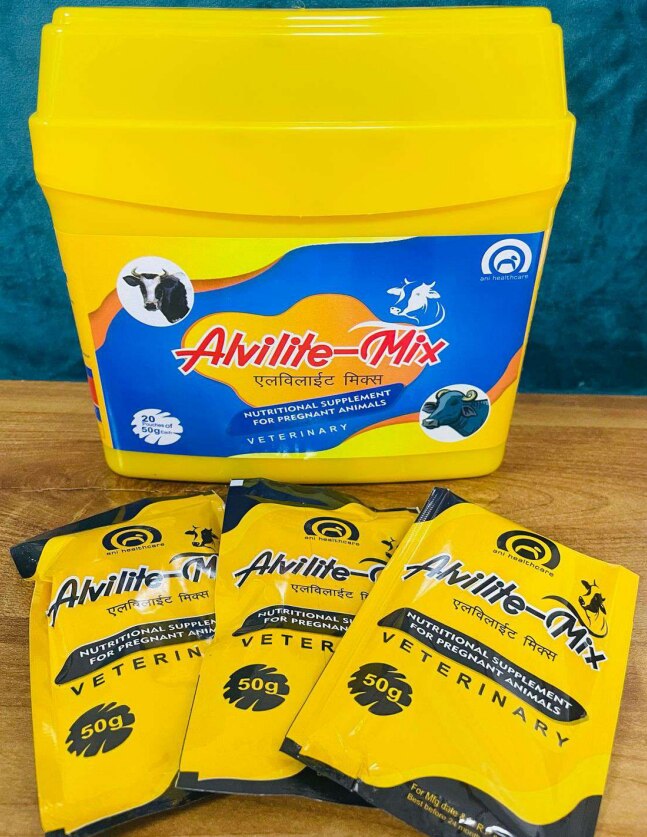 | Veterinary Division Based on the image provided, Alvilite-Mix is a specialized veterinary nutritional supplement produced by ANI Healthcare for pregnant cattle and... View product → |
Measure whether the supplement is earning its place
A supplement earns its place when it improves saleable milk or feed efficiency without worsening body condition, health, or feed cost. Track a defined trial against the herd’s historical baseline or an untreated group; a brief rise in bulk-tank volume is not enough.
| Record | Useful response | Stop repeating and investigate |
|---|---|---|
| Daily milk yield | Sustained gain after intake and stage of lactation are considered | Yield returns to baseline or differs only in the first few days |
| Milk-fat and protein results | Higher component yield or improved fat- and protein-corrected milk | Volume rises while components dilute or corrected milk does not improve |
| Dry-matter intake and feed conversion | More corrected milk per kilogram of dry matter, with feed cost per kilogram of milk under control | The supplement adds cost without better conversion or margin |
| Body-condition score and health events | Stable condition in early lactation without extra ketosis, mastitis, lameness, or digestive problems | Cows lose condition faster, or health events increase |
| Control or historical comparison | The treated cows outperform comparable cows on the same measures | The change also appears in untreated cows |
Set the evaluation window before dosing and keep the ration, delivery method, and records consistent. Check forage analysis, ration dry matter, physically effective NDF, water access, manure, and cud chewing before buying more product.
If results remain absent after correcting delivery and dose, stop the repeat purchase. Investigate inadequate intake, poor forage, heat stress, acidosis, parasites, mastitis, ketosis, calcium disorders, or management changes with your nutritionist and veterinarian.
Frequently asked questions
What should you check before choosing a cattle supplement for milk production?
Check dry-matter intake, forage quality, physically effective NDF, drinking water, and the balance of the total mixed ration.
How should supplementation change across the cow’s production stage?
Match the supplement to the demands of transition, early lactation, peak production, mid-lactation, or the dry period rather than feeding every cow the same product.
Which supplement mechanism should you choose?
Choose protein for a protein deficit, energy for an energy deficit, minerals for a confirmed mineral gap, and rumen-support products when rumen function is the production bottleneck.
How do you measure whether a supplement is worthwhile?
Track dry-matter intake, milk yield, milk fat and protein, body condition, health events, and supplement cost per additional litre.
Related products
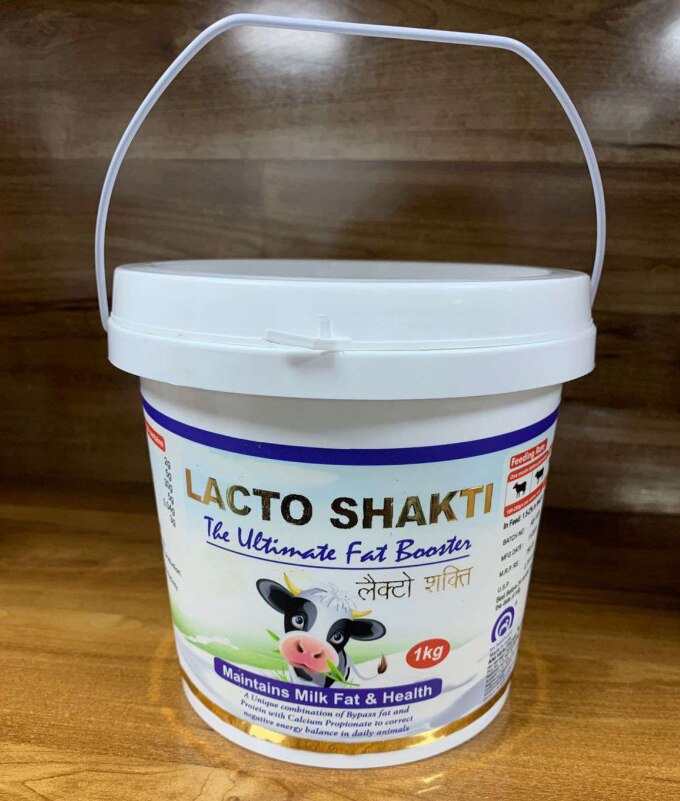 | Veterinary Division Lacto Shakti is a veterinary nutritional supplement designed as a fat booster and milk yield enhancer for dairy animals like cows and buffaloes. View product → |
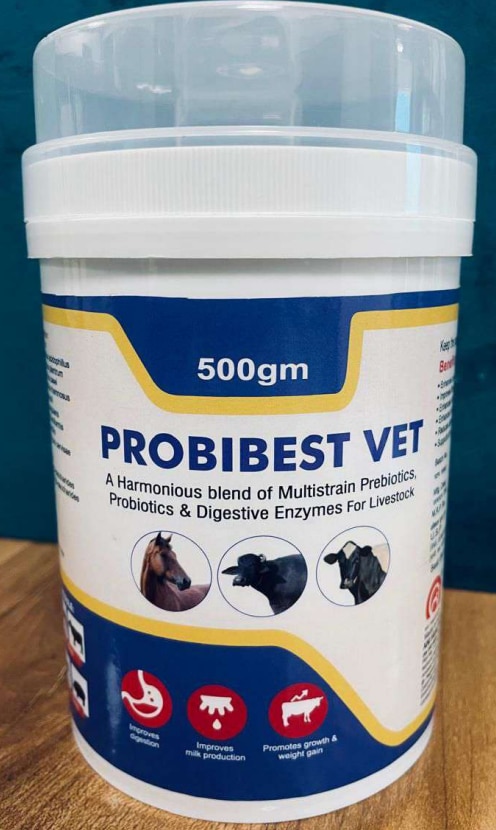 | Veterinary Division PROBIBEST VET is a veterinary nutritional supplement for livestock, including horses, buffaloes, and cattle. View product → |
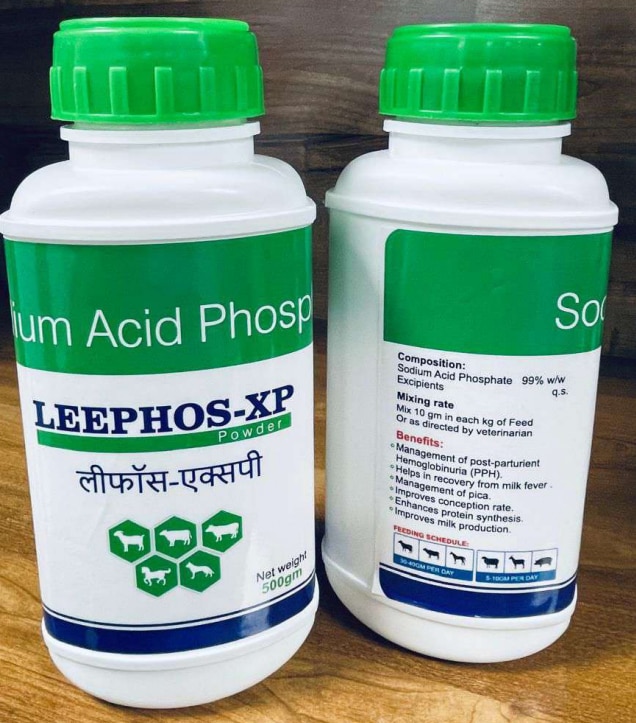 | Veterinary Division LEEPHOS-XP is a high-potency veterinary feed supplement designed to manage metabolic disorders and enhance productivity in livestock like cattle,... View product → |
Keywords